Free Books
The SingleStore Cookbook: Recipes for Multi-Model, Machine Learning and AI Data Engineering
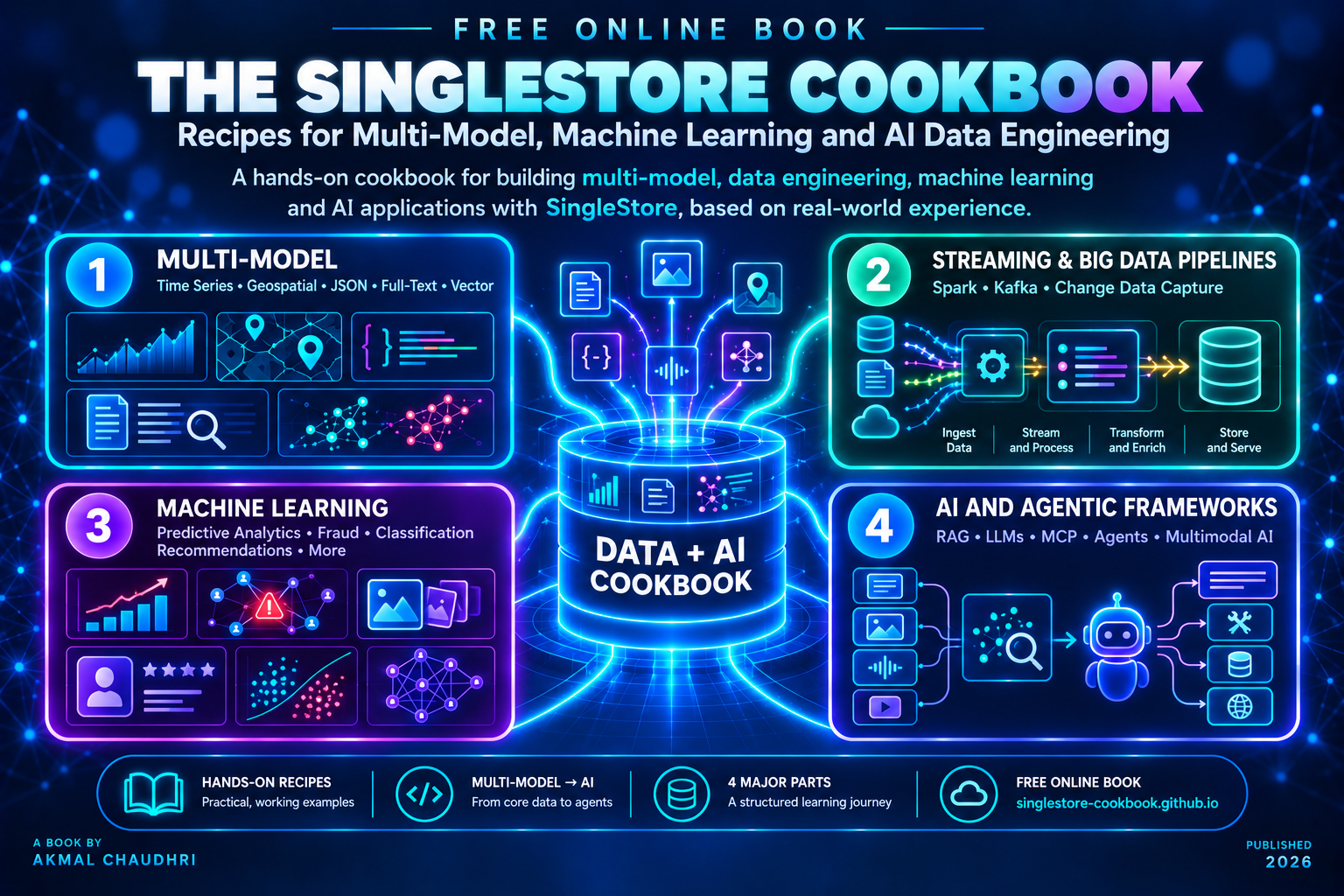
A hands-on cookbook covering SingleStore’s multi-model capabilities, from time series and geospatial data through vector search, machine learning pipelines and AI-powered applications. The recipes draw on first-hand experience building applications with the platform and are organized into four parts:
- Multi-Model
- Streaming and Big Data Pipelines
- Machine Learning
- AI and Agentic Frameworks
Seven Vector Databases in Seven Days
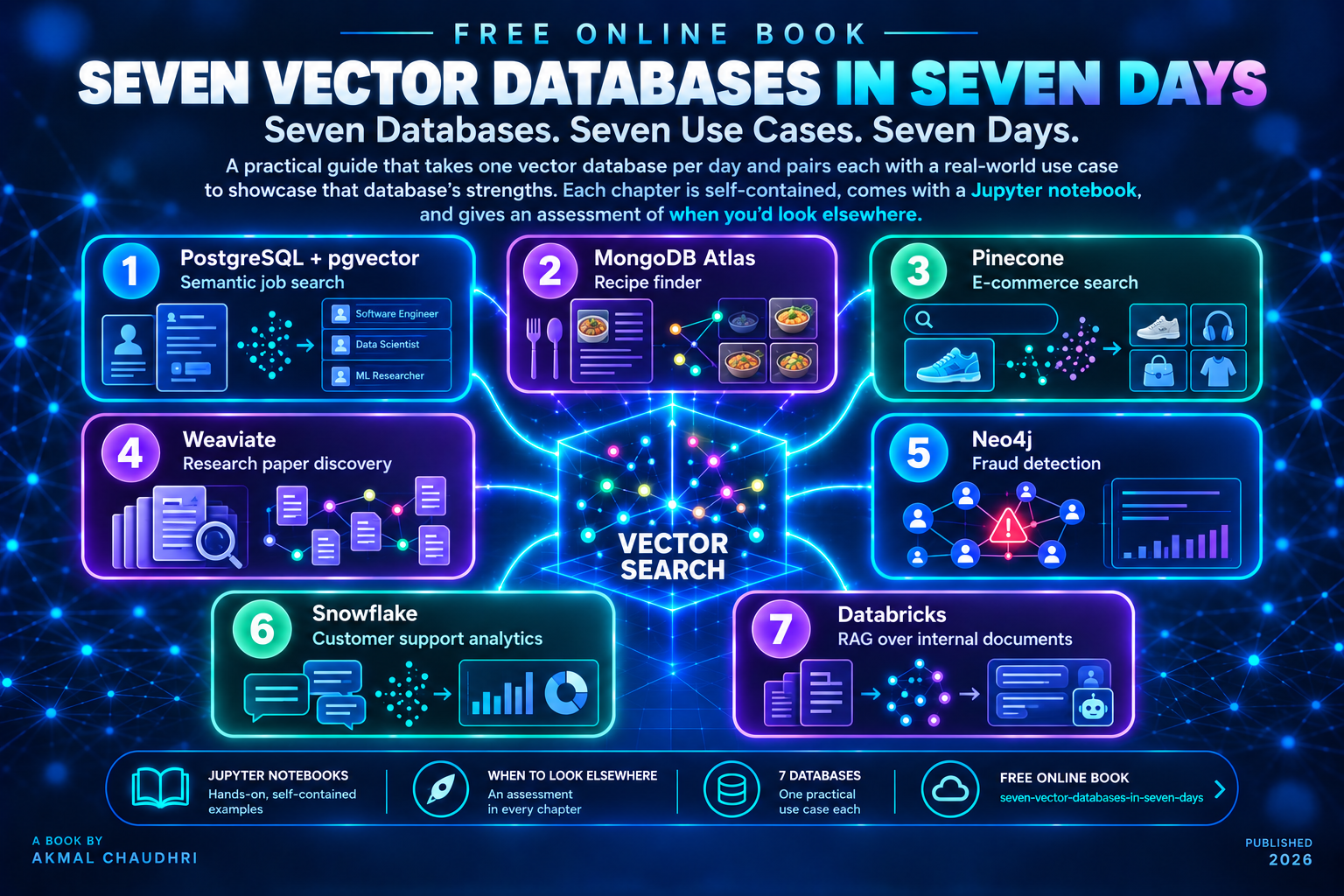
A practical guide that takes one vector database per day and pairs each with a use case chosen to showcase that database’s strengths. Databases covered:
- PostgreSQL and pgvector - Semantic job search
- MongoDB Atlas - Recipe finder
- Pinecone - E-commerce search
- Weaviate - Research paper discovery
- Neo4j - Fraud detection
- Snowflake - Customer support analytics
- Databricks - RAG over internal documents
Each chapter is self-contained, comes with a Jupyter notebook and gives an assessment of when you’d look elsewhere.
Generative AI: A Manager’s Guide
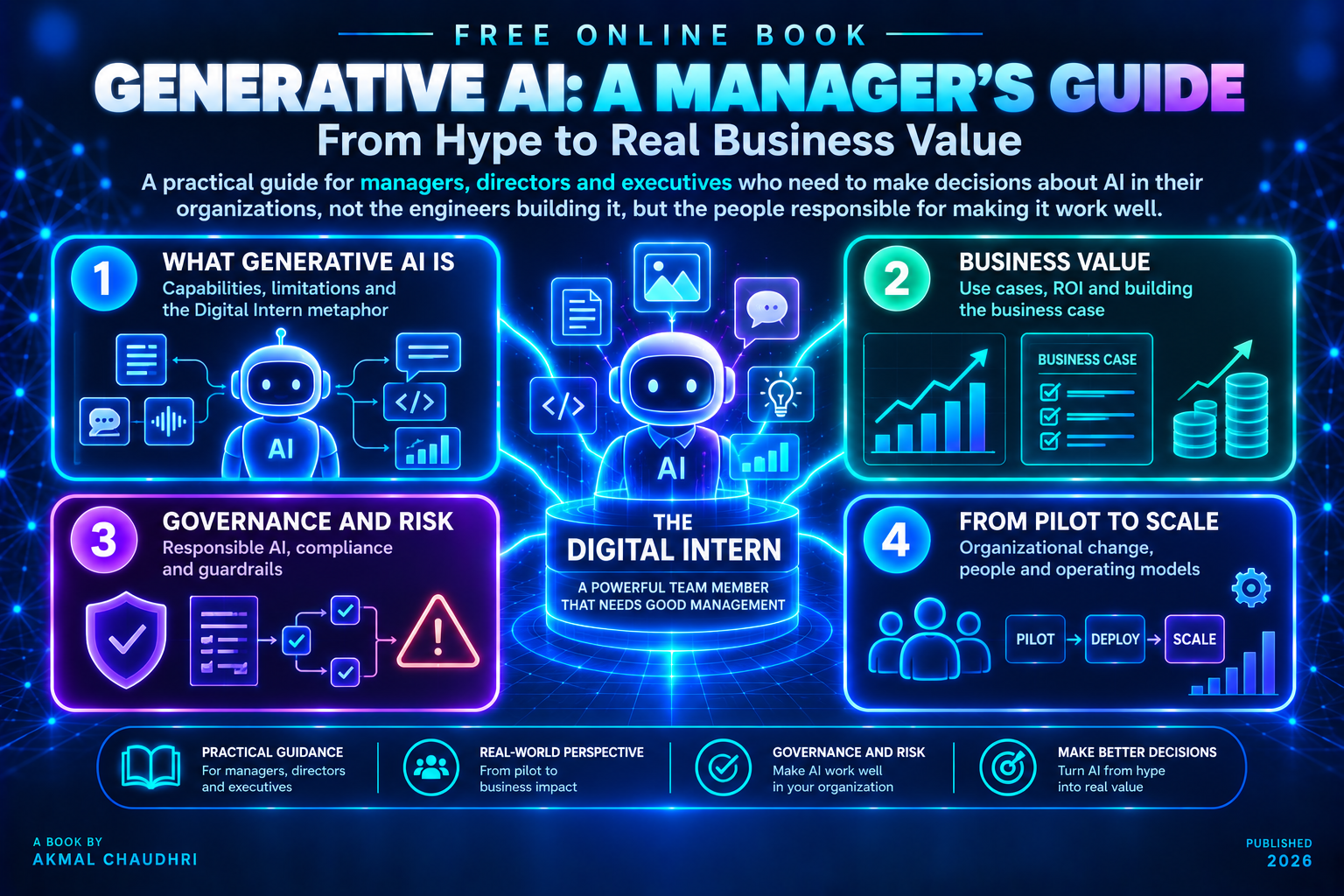
A practical guide for managers, directors and executives who need to make decisions about AI in their organizations, not the engineers building it, but the people responsible for making it work well. The book uses a single central metaphor, the Digital Intern, to frame what AI is genuinely good at, where it falls short and what managing it actually requires. It covers governance, risk, board-level accountability, business case building and the organizational change of moving from pilot to embedded capability.
Seven Ways to Do Vector Search in Python
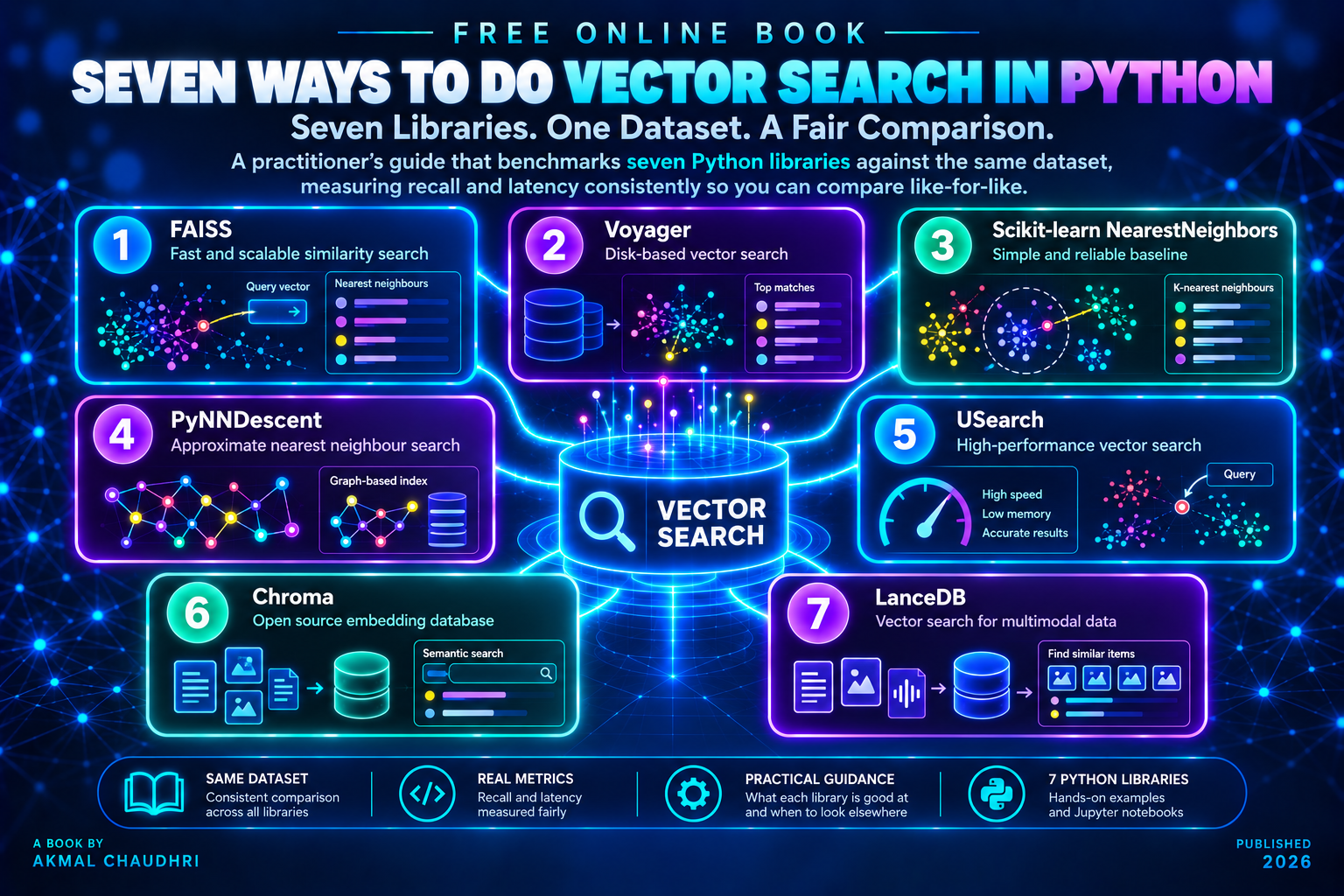
A practitioner’s guide that benchmarks seven Python libraries against the same dataset, measuring recall and latency consistently so you can compare like-for-like. Libraries covered:
- FAISS
- Voyager
- Scikit-learn NearestNeighbors
- PyNNDescent
- USearch
- Chroma
- LanceDB
Each chapter covers one library, explains what it’s genuinely good at and when you’d reach for something else.
Real-Time Vehicle Tracking with Neo4j, Databricks Lakebase and OpenStreetMap
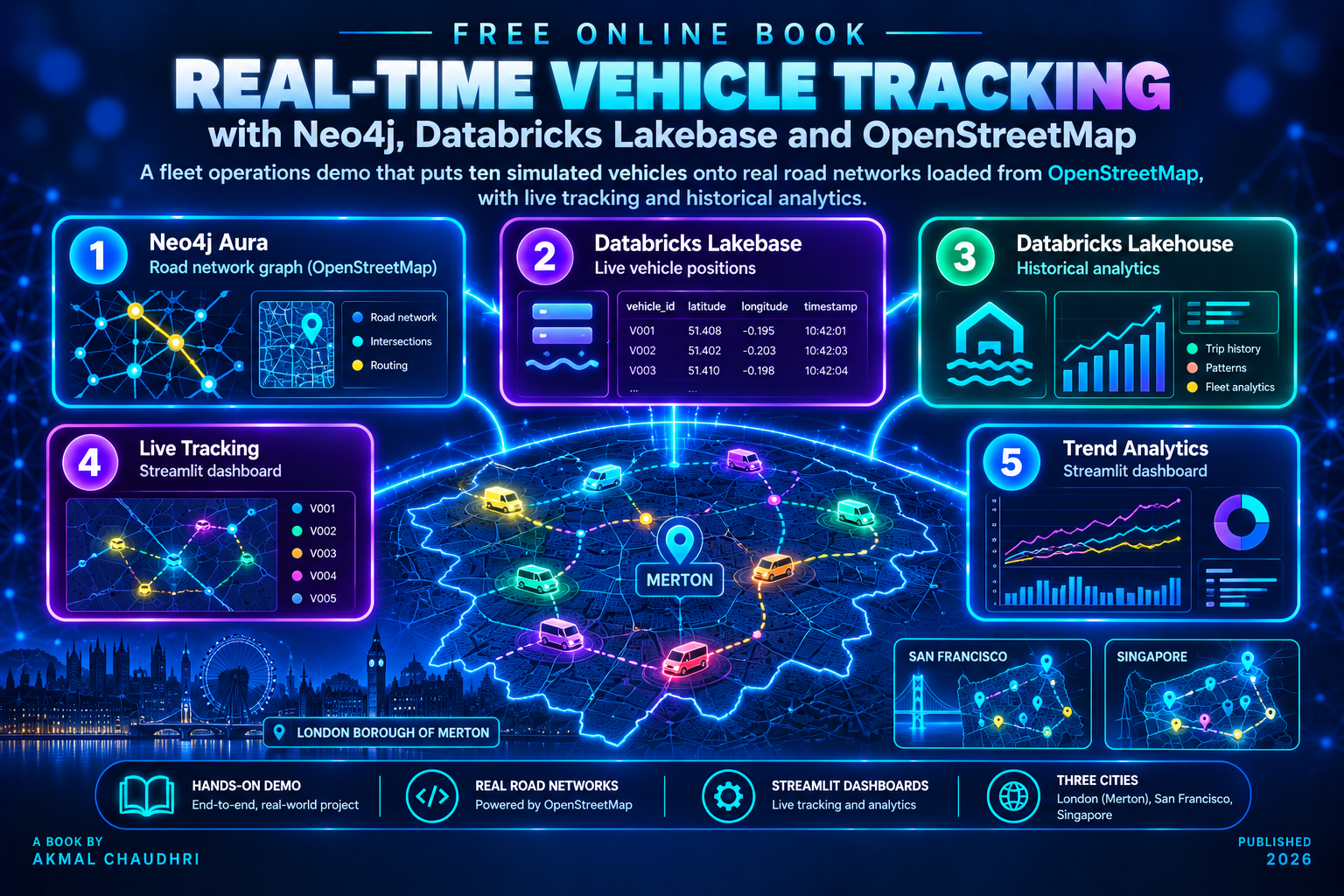
A fleet operations demo that puts ten simulated vehicles onto real road networks loaded from OpenStreetMap. The architecture:
- Neo4j Aura holds the road network graph
- Databricks Lakebase stores live vehicle positions
- Databricks Lakehouse handles historical analytics
Two Streamlit dashboards display live positions and trend data. The primary demo uses the London Borough of Merton, with additional configurations for San Francisco and Singapore.
Real-Time Supply Chain Routing with Neo4j, Snowflake Postgres and Confluent Kafka
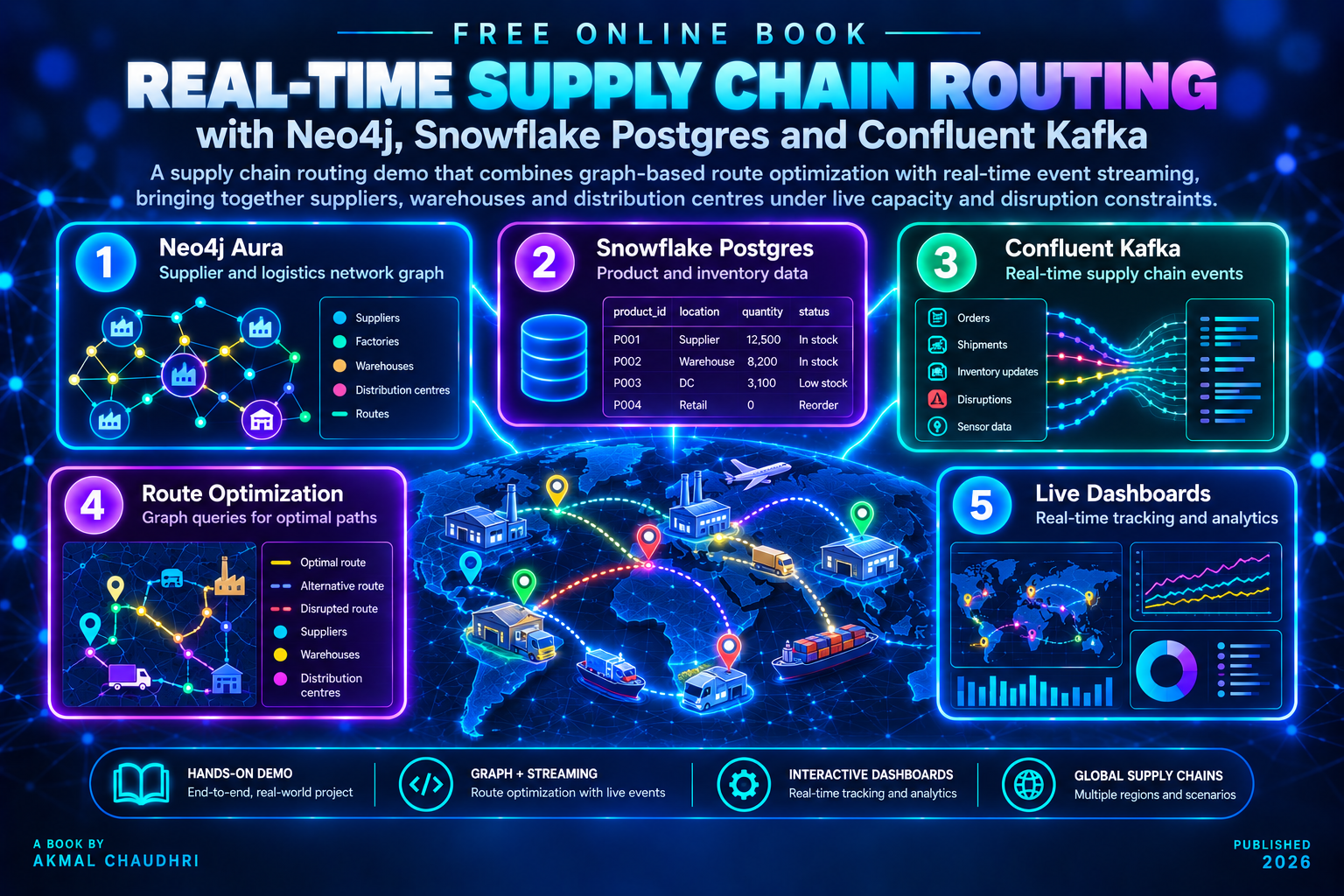
A supply chain routing demo that combines graph-based route optimization with real-time event streaming. The architecture:
- Neo4j Aura holds the supplier and logistics network graph
- Snowflake Postgres stores product and inventory data
- Confluent Kafka streams supply chain events in real time
Route queries traverse the graph to find optimal paths between suppliers, warehouses and distribution centers under live capacity and disruption constraints.
Neo4j Beyond the Graph
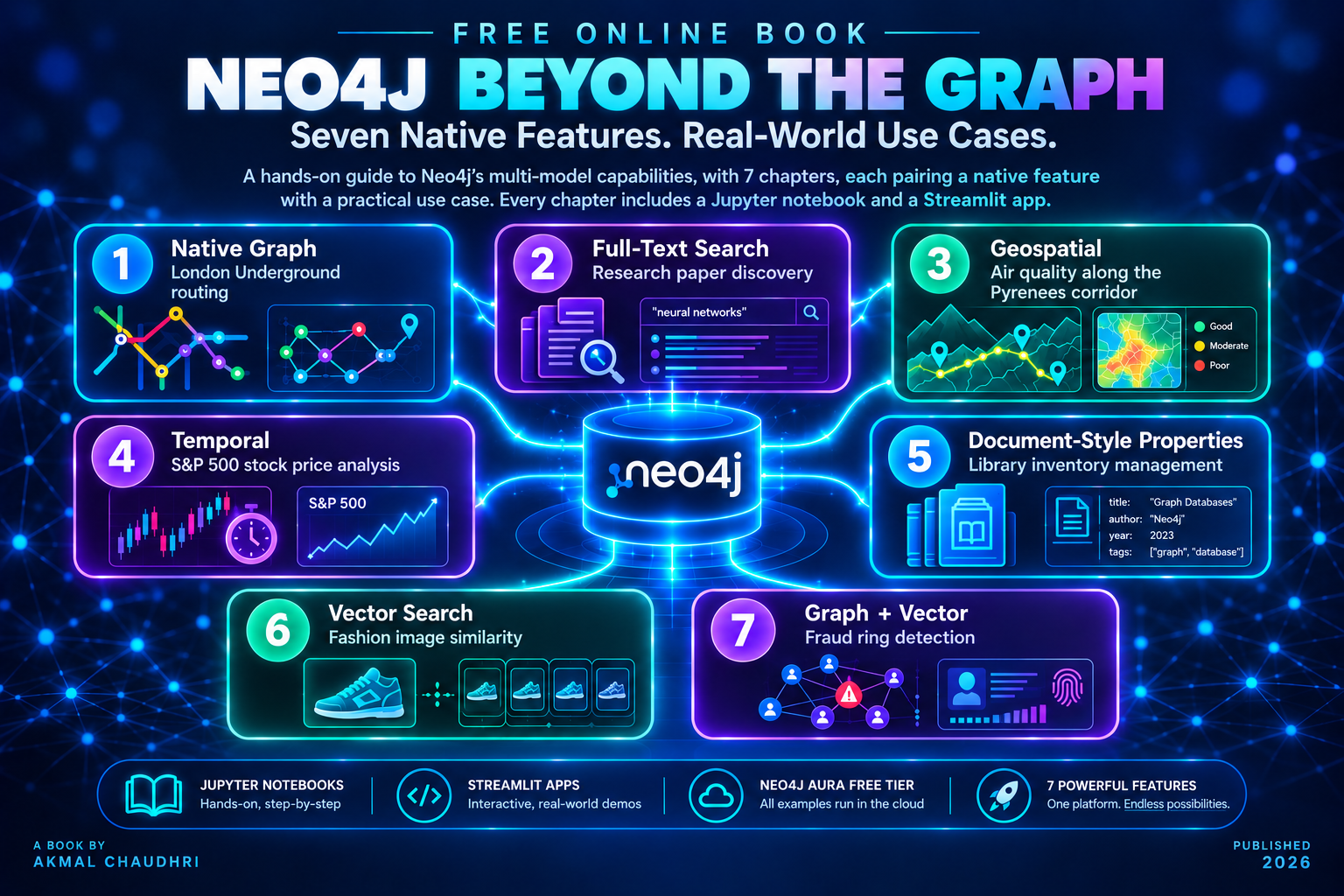
A hands-on guide to Neo4j’s multi-model capabilities, going beyond graph traversal to explore seven native features of the platform. Each chapter pairs one capability with a use case chosen to showcase it:
- Native Graph - London Underground routing
- Full-Text Search - Research paper discovery
- Geospatial - Air quality along the Pyrenees corridor
- Temporal - S&P 500 stock price analysis
- Document-Style Properties - Library inventory management
- Vector Search - Fashion image similarity
- Graph + Vector - Fraud ring detection
Every chapter comes with a Jupyter notebook and a Streamlit application. All examples run on Neo4j Aura’s free tier.
Seven Ways to Use Jev
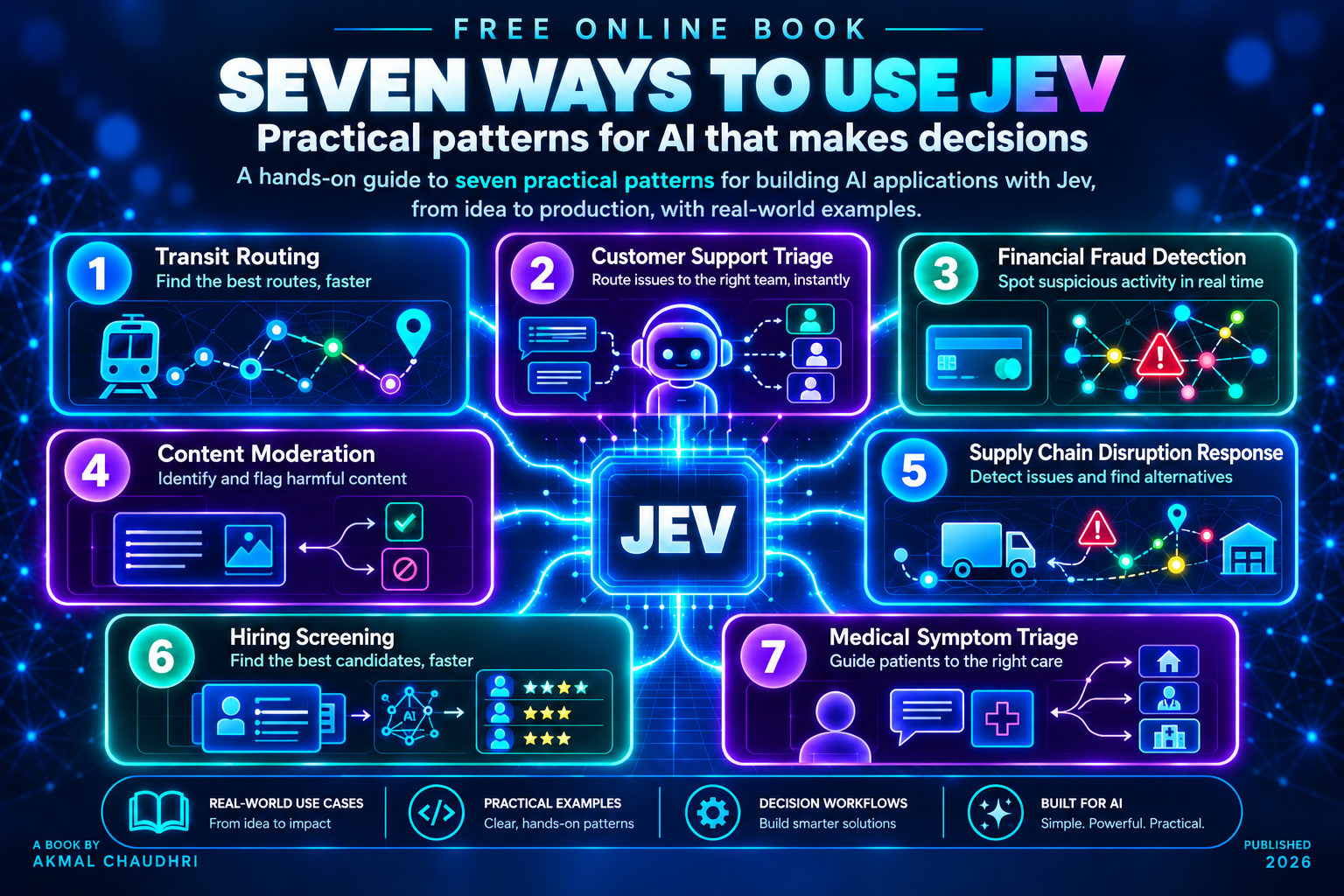
A practical guide to TypeSafe AI’s structured decision model, exploring seven domains where a single Choice call – structured state in, typed decision out, calibrated confidence alongside – replaces brittle rules-based logic. Each chapter pairs one domain with a hands-on Jupyter notebook and examines what the confidence score reveals about the decision:
- Transit Routing - Northern Line branch triage using a NetworkX graph
- Customer Support Triage - Ticket routing by team and priority
- Financial Fraud Detection - Flag or pass with a three-tier confidence response
- Content Moderation - Approve, flag or remove user-generated content
- Supply Chain Disruption - Alternative supplier selection under live constraints
- Hiring Screening - CV screening against a structured job description
- Medical Symptom Triage - Care pathway assignment with a conservative bias
A recurring theme across all seven chapters: the confidence score is more informative than the decision itself for uncertain cases and the threshold between automatic routing and human review is always a business decision, not a technical one.
Lessons Learned Putting Jev Inside Neo4j
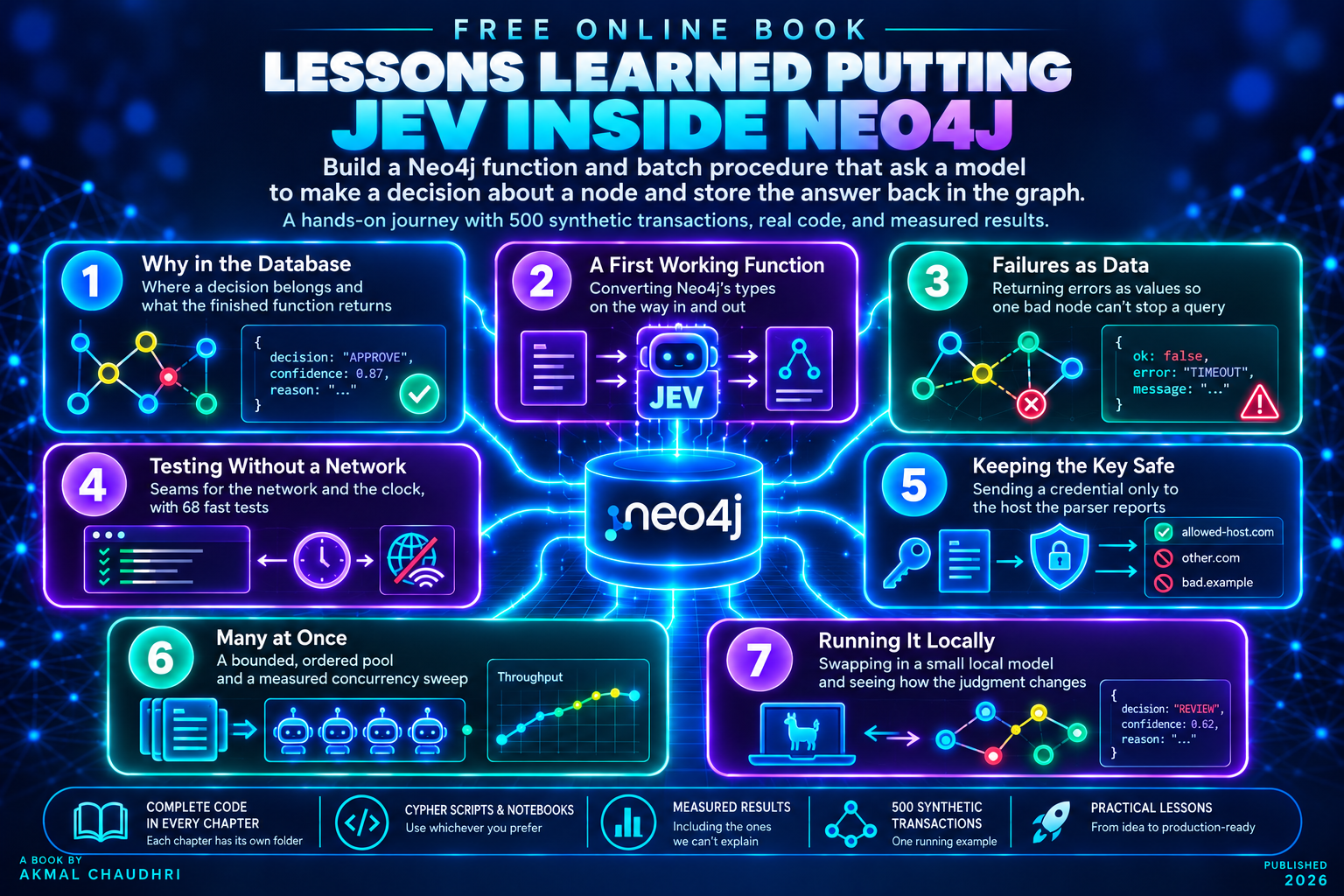
A hands-on account of building a Neo4j function and batch procedure in Java that ask a model to make a decision about a node and store the answer back in the graph. The book follows one running example, 500 synthetic transactions and each chapter adds the code that the previous chapter’s problem called for. The lessons:
- Why in the Database - Where a decision belongs and what the finished function returns
- A First Working Function - Converting Neo4j’s types on the way in and out
- Failures as Data - Returning errors as values so one bad node can’t stop a query
- Testing Without a Network - Seams for the network and the clock, with 68 fast tests
- Keeping the Key Safe - Sending a credential only to the host the parser reports
- Many at Once - A bounded, ordered pool and a measured concurrency sweep
- Running It Locally - Swapping in a small local model and seeing how the judgment changes
Every chapter with code has its own folder in the repository and each Cypher script also comes as a notebook, so you can use whichever you prefer. The results are reported as measured, including the ones we can’t explain!